
Establish S CorpHow to establish an S corp, step by step.
Here's how to establish an S corp, in the order the steps come, and what changes in your first year. Steven Palmieri works as a Tax CFO and as the Entrepreneur's CFO. He can do each step with you, from Form 2553 to payroll setup and your first Form 1120-S.
Get help with your setup
Each paper has its place, and we help you fill them in order.
The practice is in Dallas. Owners anywhere in the country work with us on a video call.
Where are you in the S corp setup?

You will be talking to the Steven Palmieri practice.

The papers you need
The state certificate, the EIN letter, Form 2553, the shareholder consent and the IRS acceptance letter, and where each one comes from.
The papers you need ›The papers you need ›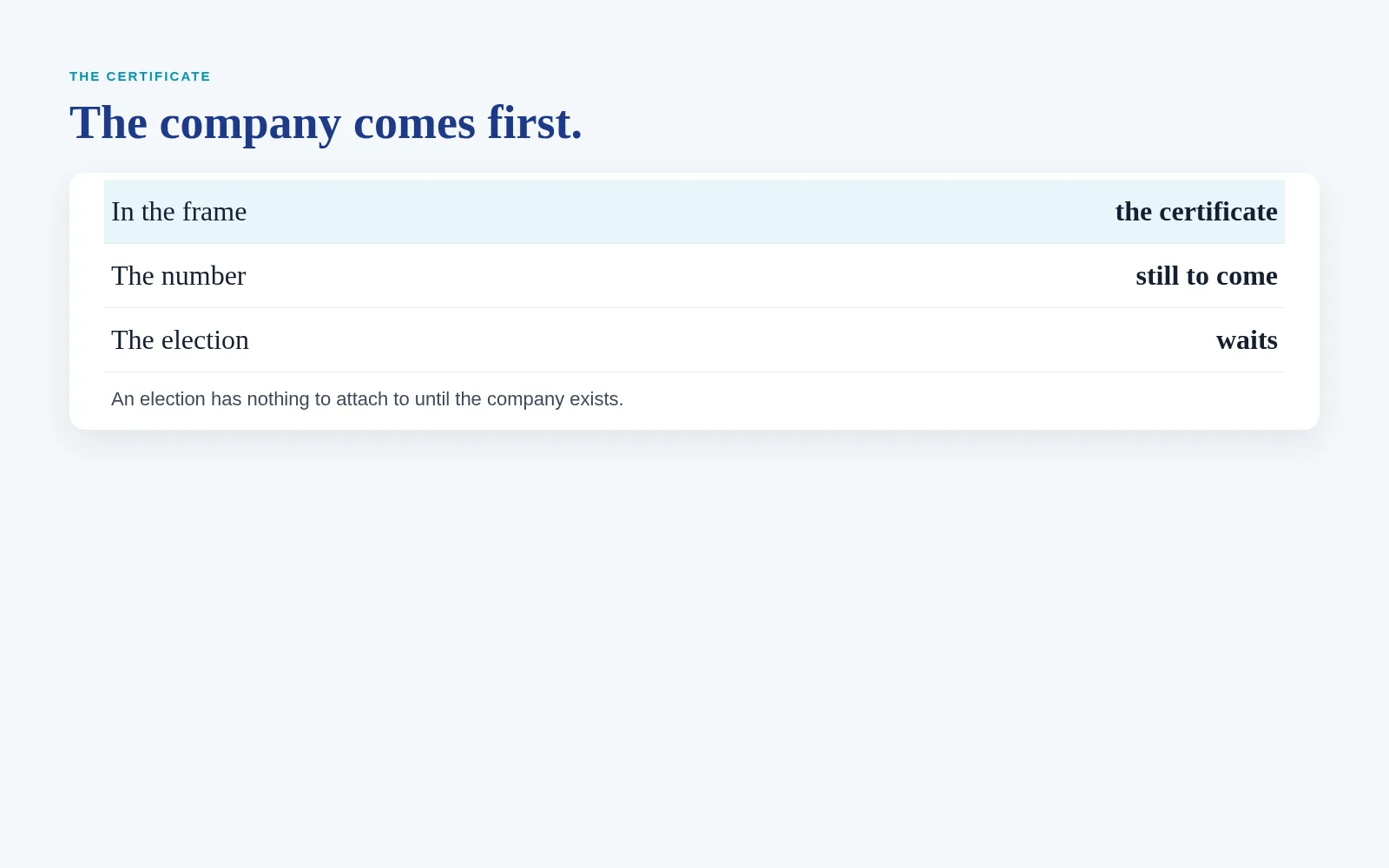
Form the company first
Your state forms the LLC or corporation. Then you get the EIN from the IRS for free.
Form the company first ›Form the company first ›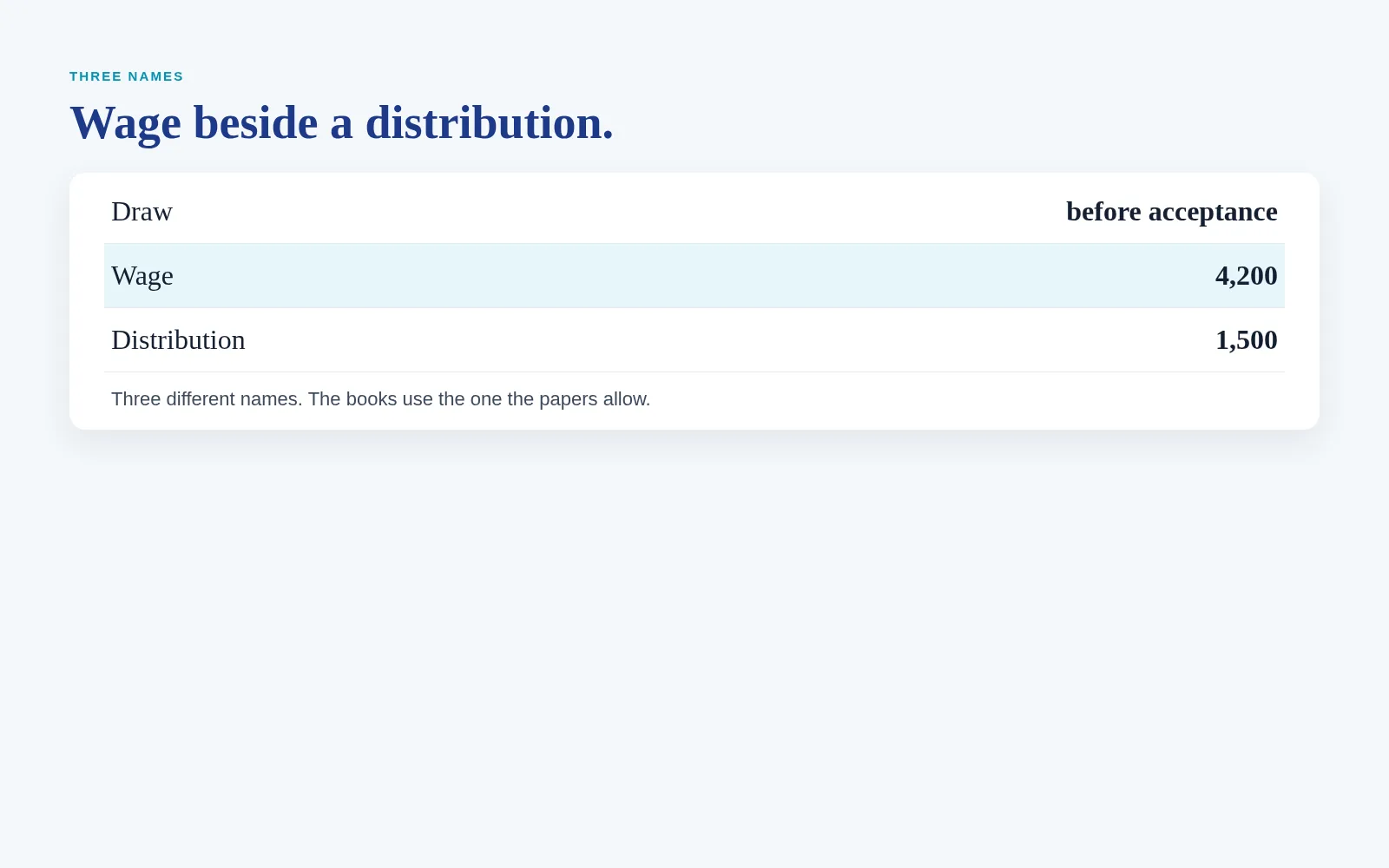
What to pay yourself
Your salary runs through payroll and has to fit the work you do. Earnings beyond your paycheck reach you as distributions.
Click to see owner pay ›Tap to see owner pay ›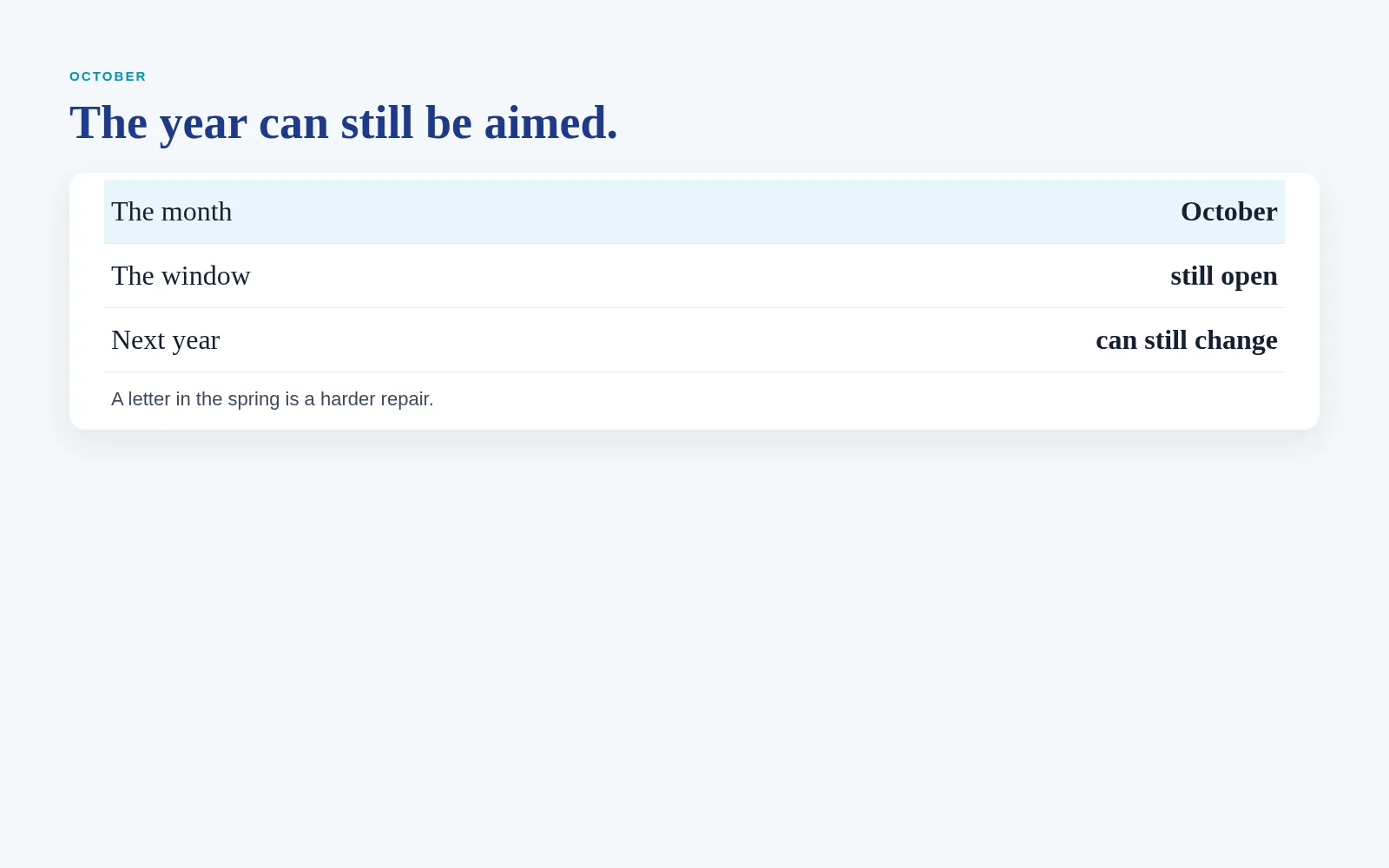
When Form 2553 is due
File any time in the year before S status starts, or within 2 months and 15 days after that year begins. A late election has its own path.
Click to see the deadline ›Tap to see the deadline ›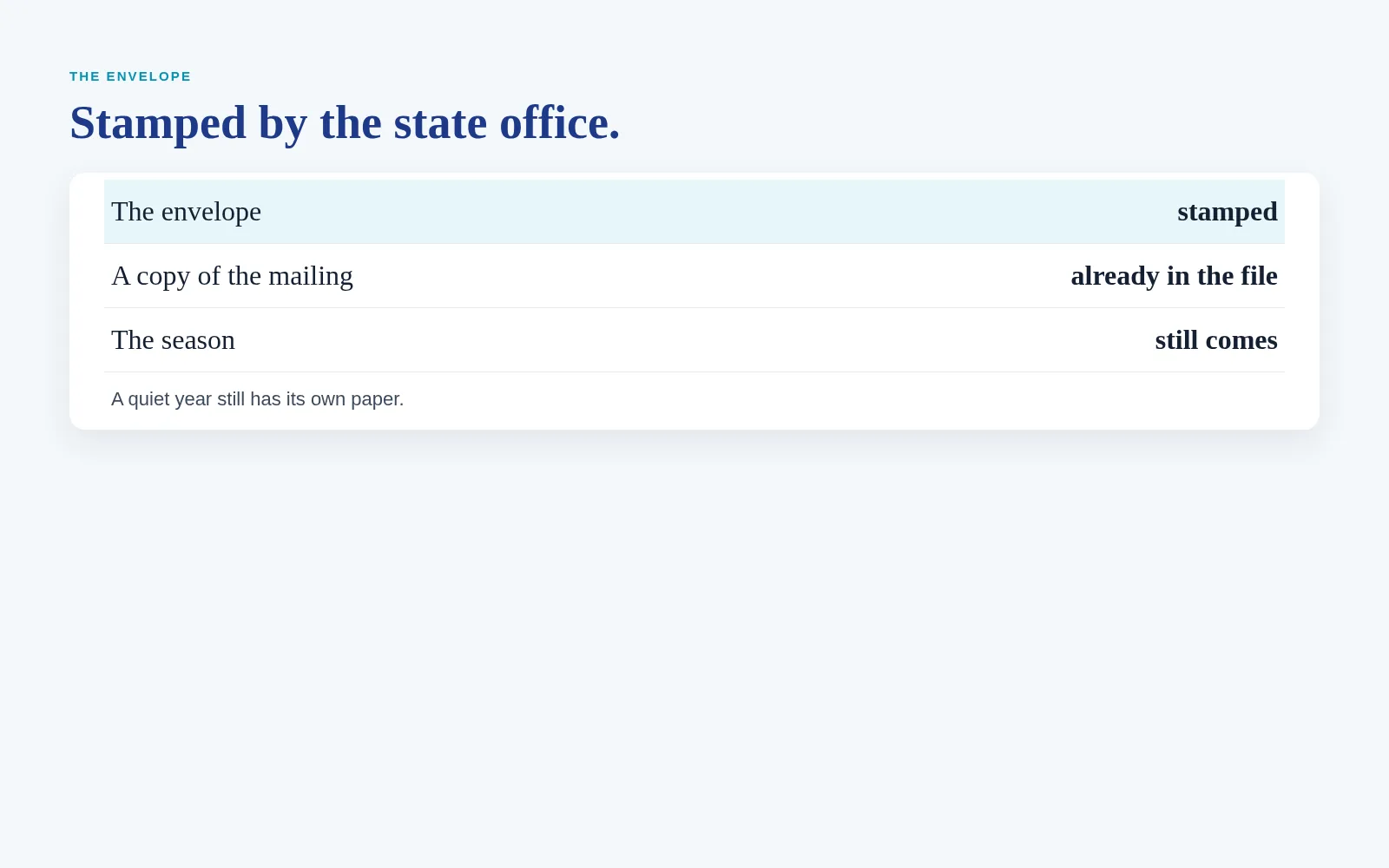
Form 1120-S and the K-1
Each year the S corp files Form 1120-S, usually by March 15, and gives each owner a Schedule K-1.
Click to see the return ›Tap to see the return ›
Questions owners ask
Straight answers on who qualifies, the deadline, your salary, the savings and the costs.
Click to see the questions ›Tap to see the questions ›Who handles each S corp paper
Six things come up when you establish an S corp. We help with four of them, and we line up the right person for the other two. Tap a row to guess, then see the answer.
1State certificate We help with this
Your state issues it when the company is formed. We check that the legal name on it matches what goes on Form 2553.
We do this one with you.
2EIN letter We help with this
The IRS issues the EIN free online, and the CP 575 letter confirms it. Lost yours? Letter 147C from the IRS confirms the same number.
We do this one with you.
3Uneven profit shares Someone else helps
If owners are promised different shares of profit, a lawyer updates the agreement first, so the company keeps one class of stock.
A lawyer updates the ownership agreement for this one, and we can help you find a lawyer.
4Owner signatures We help with this
Each person who holds shares puts a signature and a date on the Form 2553 consent. We help you list who signs, including a spouse when Texas community property rules apply.
We do this one with you.
5Acceptance letter We help with this
The IRS mails a CP261 notice when it accepts the election, usually within 60 days. We help you follow up if two months pass with no answer.
We do this one with you.
6Audited statements Someone else helps
If a lender asks for audited or reviewed statements, an outside audit firm signs them. We get your books ready for that firm.
An outside audit firm signs this one, and we get the books ready.
Steven Palmieri, Tax CFO
We set up your S corp with you, then keep the books, the payroll setup and the return in one place.
Click to meet the practice ›Tap to meet the practice ›Tell us where you are in the setup, and on a free 30-minute call we'll go through your next S corp step with you.
Get help setting up your S corp
You will be talking to the Steven Palmieri practice.
What is an S corp?
An S corp is a tax choice you make with the IRS for a corporation or an LLC. The company stays the same company with your state. What changes is how the IRS taxes its profit.
An S corp usually pays no federal income tax on its profit. Instead, each owner's share of the profit goes on their own personal return. Most LLCs already work that way, so the real change is how an owner who works in the business gets paid.
If you work in the company, the pay for that work is a salary, and payroll is how it gets paid. Social Security and Medicare come out of that salary, the same as at any job. Profit paid out beyond the salary is a distribution, and distributions don't carry self-employment tax. That difference is where the savings come from.
Is an S corp a different kind of company?
No. It's a tax status. A Texas LLC stays an LLC with the state, with the same name and the same certificate. Once the IRS accepts the election, it files a different federal return.
Who qualifies for an S corp?
The qualifying rules come from the Form 2553 instructions on irs.gov. Your company qualifies when all of these are true.
- It's a corporation, or an LLC, formed in the United States.
- It has no more than 100 shareholders. Members of one family can count as one.
- Its owners are people, estates, certain trusts or certain tax-exempt groups. Shares can't be held by a partnership, by another corporation or by a nonresident alien.
- It has one class of stock. Owners can have different votes, but profit has to be paid out in line with ownership.
- It isn't one of the few excluded types, such as certain banks and insurance companies.
Most small LLCs and corporations owned by one or a few people who live in the U.S. qualify. If an owner is a company or lives abroad, tell us first, and we'll work out the options before anything is filed.
How to establish an S corp, step by step
- Form the company with your state. In Texas, that's a Certificate of Formation filed with the Secretary of State.
- Get the EIN. The IRS issues it free online, and the CP 575 letter confirms it. Keep that letter, because Form 2553 has to match the name and number on it.
- Check the ownership. Write down each owner and their share, and make sure profit gets paid out by ownership.
- Fill out Form 2553. Pick the date S corp status should start, and have every shareholder sign the consent. In Texas, a spouse with a community interest in the shares signs too.
- File it on time. Mail or fax it to the IRS address in the instructions, and keep proof of the date you sent it.
- Watch for the acceptance letter. The IRS usually decides within 60 days and mails a CP261 notice. If two months go by with no answer, call the IRS business line.
- Set up payroll for the owner's salary before the first paycheck in S corp status.
That's the whole setup. On a free 30-minute call, we go through each step with you and tell you which one you're on.
What if I lost the EIN letter?
Call the IRS Business and Specialty Tax Line and ask for Letter 147C. It confirms your EIN and the exact name the IRS has on file, which is the name Form 2553 needs.
Do I need Form 8832 too?
Not usually. An LLC that files Form 2553 on time doesn't need Form 8832. Form 2553 covers both choices.
When is Form 2553 due?
You can file it any time during the tax year before S corp status should start. Or you can file it no more than 2 months and 15 days after that tax year begins.
Say your company runs on the calendar year and you want S status from next January 1. You can file any day this year, or as late as March 15 of next year. For a new company, start the count on whichever of three dates comes first. The three dates are the day it gets an owner, the day it first holds assets, and the day it opens for business. A company that starts on July 1 has until September 15.
Missed it? The IRS has a simpler path for a late election, called Rev. Proc. 2013-30. In general, you file within 3 years and 75 days of the date you wanted S status to start, you show a reasonable cause for being late, and you write a short statement at the top of the form. We check whether you fit and prepare it with you.
What if late relief doesn't fit?
File now for next year. Then set up payroll and the books in the fall, so January 1 starts clean.
Can I file Form 2553 online?
Form 2553 goes by mail or by fax to the IRS address listed in the instructions for your state. Keep the fax confirmation or the mail receipt.
What changes after the election?
Your salary runs through payroll. Withholding, Social Security and Medicare come out of each paycheck, and the company pays its own share. The IRS says an S corp must pay reasonable pay to a shareholder who works in the business before it makes other distributions.
Profit left after your salary can come out as distributions, split by ownership.
The S corp files Form 1120-S every year. For a calendar-year company, it's due March 15, or the next business day when that date falls on a weekend or holiday. Every owner then receives a Schedule K-1, and the profit on it is what they carry to their Form 1040.
Payroll brings its own filings, usually Form 941 every quarter, Form 940 once a year, and a W-2 for each employee, you included.
Who runs payday?
You do, with a payroll provider you pick. We set the payroll up with you, and you run each payday from your own account.
Does the S corp file a return in a slow year?
Yes. Form 1120-S is due for every year the election is in effect, even with no income. The late penalty is charged for each shareholder for each month the return is late, so it adds up quickly.
How much can an S corp save you?
Here's a worked example of the S corp math. Say you're the only owner, and the business makes 120,000 dollars of profit before it pays you.
Without the election, self-employment tax applies to 92.35 percent of that profit, at 15.3 percent. That comes to about 16,955 dollars.
With the election, say you pay yourself a salary of 60,000 dollars that fits your work. Social Security and Medicare on that salary come to 15.3 percent, split between you and the company, or 9,180 dollars. The other 60,000 dollars comes out as a distribution without that tax.
That's about 7,775 dollars less in Social Security and Medicare. Running an S corp has costs too, mostly the payroll service and a second tax return. If those come to 3,000 dollars a year, you'd keep about 4,775 dollars. Income tax shifts a little as well, and your own numbers will differ.
At lower profit, the gap shrinks. With 40,000 dollars of profit and a salary of 30,000 dollars, the tax saved is about 1,060 dollars, and the costs can use most of it up. Bring your own profit figure to a free 30-minute call, and we'll work the same math with it.
What does it cost to run an S corp?
Plan for these costs each year once S corp status starts.
- A payroll service to run your paychecks, which most owners pay for monthly.
- The company's half of Social Security and Medicare on your salary, which is 7.65 percent.
- Federal unemployment tax, usually 0.6 percent of the first 7,000 dollars of each employee's pay, or 42 dollars a year, plus your state's unemployment tax.
- A separate business return each year, Form 1120-S, along with your personal return.
- Monthly bookkeeping, so the salary, the distributions and the K-1 line up.
- Your state's yearly report. In Texas, the May 15 filing owes no tax under 2,650,000 dollars of revenue for 2026 and 2027, and the company still files its public information report.
We quote our own price before any work starts, so you can weigh it against your savings on the call.
How we help you establish your S corp
We'll do it with you. On a free 30-minute call, we look at where you are, check that your company qualifies and give you the date Form 2553 is due.
If you'd like us to, we prepare Form 2553 with you, set up payroll with the provider you pick, keep the books each month, and prepare Form 1120-S and the K-1.
You file the formation papers with the state, and you sign the election. A lawyer drafts or updates an ownership agreement when it needs work. If a lender asks for audited or reviewed statements, an outside audit firm signs those, and we get the books ready for them.
Do you help form the company?
You file it with your state, usually online, and we walk you through it on the call, so the name and the dates match what Form 2553 needs. In Texas, the filing fee is 300 dollars, paid to the Secretary of State.
What would an S corp save me?
We'll run your real numbers on the free 30-minute call and show you, using a salary that fits your work.