Establish S CorpAn example S corp setup, from the state filing to the first K-1.

Follow one sample owner through the whole setup and the first year, with the numbers. The owner and the numbers are made up, and yours will differ.

Ask about your own setup
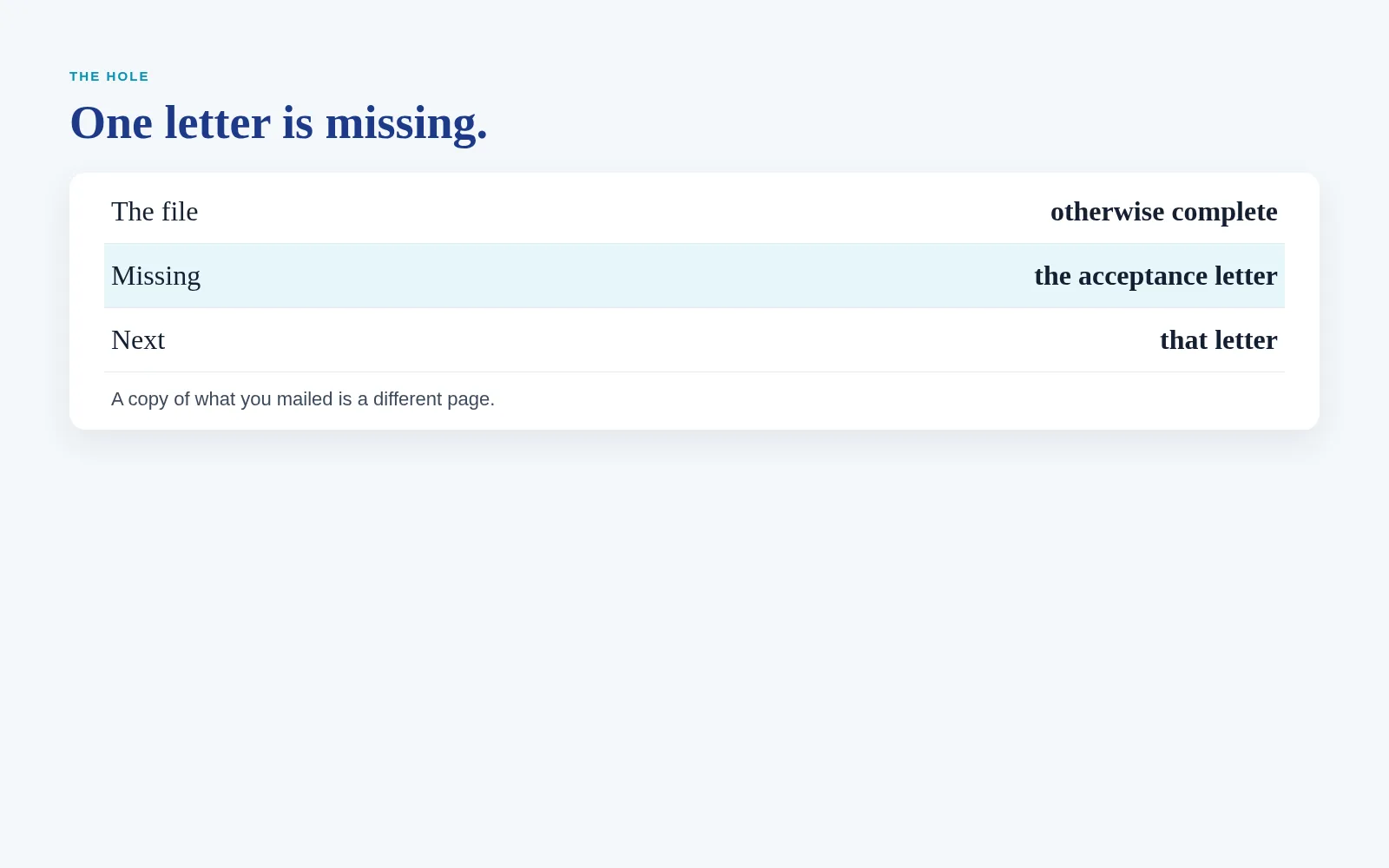
An S corp file that is complete except for one missing signature.

Sample

The setup.

Dana runs a small design studio as a Texas LLC she owns by herself. She files the Certificate of Formation in January and pays the 300 dollar state fee. She gets the EIN the same day on the IRS website and saves the CP 575.

She wants S corp status from the first day of the company's tax year. Form 2553 is ready in February, with one signature line still blank.

Dana is married, and in Texas her husband Lee has a community interest in her shares. So Lee signs the consent too. He signs the next week, and Dana faxes the form well before the deadline of 2 months and 15 days.

Pay

The first months.

The CP261 acceptance notice arrives about six weeks later. Dana sets up payroll with a provider she picked and pays herself a monthly salary that fits the design work she does.

Profit beyond her salary comes out as distributions. Each month, the books show her salary, the payroll taxes and the distributions on separate lines.

Because no tax is withheld from distributions, she also makes estimated tax payments each quarter.

Math

The math for the year.

Say the studio makes 150,000 dollars of profit before Dana's pay, and her salary is 70,000 dollars.

As a plain LLC, self-employment tax on that profit would be about 21,194 dollars. As an S corp, Social Security and Medicare on her salary come to about 10,710 dollars.

That's about 10,480 dollars less in those taxes. After about 3,500 dollars for payroll service, the extra return and unemployment tax, the studio keeps about 7,000 dollars. Income tax shifts a little too.

Two

If Dana had a business partner.

Say Dana's friend Sam owns 40 percent and Dana owns 60 percent. Both of them sign the consent, and so does any spouse with a community interest in the shares.

Only an owner who works in the business needs a salary. If Sam works there too, he gets a salary that fits his work, through the same payroll.

Distributions follow ownership, 60 percent to Dana and 40 percent to Sam, every time. Paying one owner extra through distributions can put the one class of stock rule at risk, so extra pay for extra work goes through salary.

Each of them gets a K-1 with their own share of the profit.

Does this sound like your setup?

Steven Palmieri, Tax CFO

You will be talking to the Steven Palmieri practice.

The first tax season

By January 31, the payroll provider prepares Dana's W-2 and the year-end payroll forms.

By March 15, the studio files Form 1120-S. Dana gets a Schedule K-1 that shows the studio's profit after her salary, and it goes on her personal return with her W-2.

In May, the studio's revenue is under 2,650,000 dollars, so no Texas franchise tax is due. Dana files the public information report by May 15.

If the studio had paid Dana no salary, the IRS could treat part of her distributions as wages and charge the payroll taxes back. A salary that fits her work keeps that from happening.

Dana keeps the CP261 notice, the signed Form 2553 and the certificate in one folder, because her bank asks for them when she applies for a line of credit.

Then Dana plans next year. She looks at her salary again, sets aside money for estimated taxes, and checks that the books matched the bank each month.

On a free 30-minute call, we walk through the same steps with your company and your numbers.

Where to go from here.